High-throughput drug screening transcriptome sequencing
Fast, high-throughput, comprehensive transcriptome information helps drug discovery
With the rapid development of molecular biology and functional genomics, the number of potential drug targets has increased substantially, while traditional screening approaches can no longer meet the demands of modern drug discovery and development. High-throughput screening technologies are therefore essential for efficient pharmacodynamic evaluation and mechanism-of-action (MOA) investigation, addressing the challenge of balancing the increasing number of drug candidates with screening efficiency during early-stage drug discovery.
The Sequanta platform provides a powerful solution to these challenges. By enabling high-throughput screening of hundreds of drug candidates and experimental conditions, the platform supports simultaneous whole-transcriptome profiling of all samples, generating comprehensive molecular insights into drug responses. Through gene expression profiling, it enables precise identification of metabolic pathways affected by drug treatment, reveals transcriptional changes induced by candidate compounds, and facilitates comprehensive evaluation of drug efficacy and mechanisms, ultimately improving the efficiency and success rate of drug discovery.
Workflow(只放图)
High-throughput transcriptome sequencing combines sample barcoding with one-step reverse transcription and amplification reactions. Cell lysis, sample barcoding, and reverse transcription are performed in a single step on a high-throughput microplate, enabling efficient generation of well-specific cDNA molecules. After pooling and purification, a transcriptome library containing sample-specific barcode information is constructed. Following sequencing, data from different drug-treated samples are demultiplexed based on barcode information for downstream analysis.
Sample Requirements


Sample TypeSample Input Amount Storage and Transportation
Adherent Cells and Organoids

Number of cells: : 2,000–10,000

Centrifuge and wash cells twice with PBS. Add 30 μL of AccuraCode lysis solution (provided by Sequanta), incubate at room temperature for 6 minutes, and immediately freeze the samples on dry ice.

Stored at −80°C and transported on dry ice.

Suspension cells

Number of cells: 2,000–10,000

Transfer 10 μL of cell suspension and add 10 μL of AccuraCode lysis solution (provided by Sequanta). Mix and incubate at room temperature for 6 minutes, then immediately freeze on dry ice.Number of cells: 2,000–10,000


Stored at −80°C and transported on dry ice.


Advantages
High throughput, short cycle time, low cost
Taking a 384-well or 96-well cell culture plate as a unit, the entire plate samples are pooled at one time to quickly obtain full transcriptome data of all samples, and the cost is much lower than that of conventional transcriptome sequencing.
Genetic detection is equivalent to conventional methods
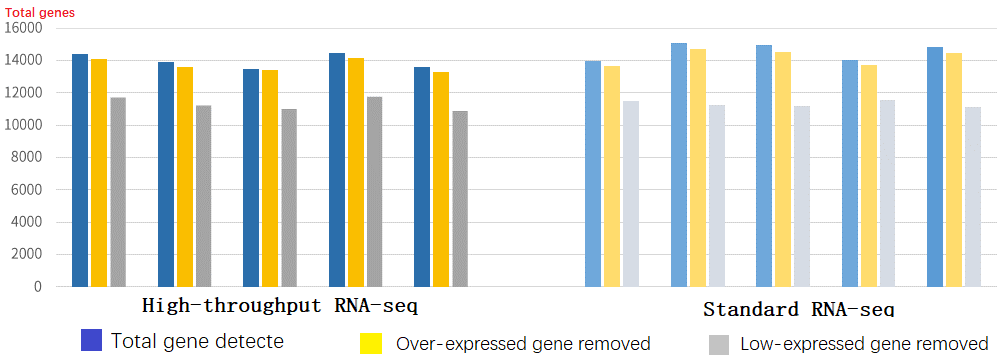
The detection effect of high-throughput transcriptome sequencing on genes with different expression levels is comparable to that of conventional methods.
描述
Figure: Comparison of detected genomes between high-throughput transcriptome sequencing and conventional methods
Reliable data quality
Sample repeat testing results show high data repeatability and method stability.
描述
Figure: Data correlation comparison of sample repeat testing
Comprehensive transcriptome study
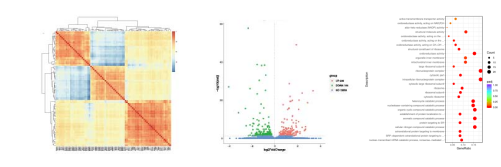
Whole transcriptome data supports comprehensive analysis of differentially expressed genes and signaling pathways.
描述
Applications
描述
双击编辑文字内容
描述
描述
描述