描述
Solutions for PDX Models
PDX model-based solutions are valuable tools for helping researchers define drug development strategies and advance therapeutic discovery, while enhancing the understanding of disease mechanisms. Sequanta Technologies provides accurate, efficient, and high-throughput testing solutions for preclinical drug research using cell and animal models. By enabling multidimensional drug target discovery, evaluating drug efficacy and immune response mechanisms, supporting high-throughput drug screening, and enhancing quality control throughout research and production processes, we help accelerate more precise and efficient innovative drug discovery and development.
Services

Model Genetic Background Profiling (WGS/WES/RNA-seq/WGBS)
Model Establishment and Concordance Assessment with Original Samples (WES/Tumor Panel/RNA-seq)
Culture Condition Optimization and Co-culture Analysis (RNA-seq/scRNA-seq)
HLA/H-2 Typing (WES/Amplicon-seq)
Tumor Purity Analysis (WES)
Molecular Breeding (Low-pass WGS)
Intraspecies Contamination Detection (SNP Panel/WGS/WES)
Mouse–Human Cross-species Contamination Detection (WGS/WES/RNA-seq)
CRISPR Screening sgRNA Sequencing
CRISPR Off-target Detection (WGS/Amplicon Sequencing/Guide-seq)
Integration Site Analysis of Viral Vectors, Transposons, and Other Elements
In Vivo Distribution Analysis of CAR-T/NK and TCR-T Cells (qPCR)
Tumorigenic Cell Identification (Amplicon Sequencing)
High-throughput drug screening drug mechanism of action (MoA)(RNA-seq/drug-seq) 
Pharmacodynamic evaluation and drug resistance mechanism (WGS/WES/tumor panel/RNA-seq) 
Gene mutation testing (WGS/WES/tumor panel) 
Gene fusion testing (gene fusion panel/RNA-seq) 
Drug Response Gene Signature Profiling (WGS/WES/Tumor Panel)
 Protein Biomarker Profiling (Proteomics)
Highly Sensitive Detection of Target Proteins (NULISA)
Immune Target Expression Profiling (RT-PCR/RNA-seq/WES/Olink)
Tumor Immune Microenvironment Profiling (RNA-seq/scRNA-seq/TCR/BCR Sequencing)
Tumor Neoantigen Prediction and Validation (RNA/WES)
Antibody Screening (BCR/10x Feature Barcode)
Tumor Heterogeneity Profiling (Tumor Panel/WES/Single-cell DNA Sequencing)
Organoid-based Tumor Immune Co-culture Analysis (scRNA-seq)
High-throughput Target Screening (WGS/WES/Tumor Panel/Proteomics)
Target Expression Profiling (RT-PCR/RNA-seq/Proteomics)
Target Knockdown and Overexpression Analysis (RT-PCR/RNA-seq/Proteomics)
Multi-omics Analysis (WGS/WES/RNA-seq/Proteomics)
Gut Microbiome Profiling (mNGS)
Environmental Microbial Profiling (mNGS)
16S rRNA Sequencing
Cases
PDX Model Quality Control
In the quality control of PDX models, traditional approaches typically rely on individual methodologies to detect specific known genetic variations or limited types of microbial contamination. Sequanta Technologies provides a high-throughput PDX model quality control solution that enables comprehensive detection of genetic variations and tens of thousands of microorganisms based on reference databases. This solution delivers high sensitivity, high specificity, and comprehensive evaluation capabilities, meeting stringent quality control requirements throughout research and development and production processes. Furthermore, to support IND submissions and product registration applications, relevant testing methods can be validated and performed in compliance with GLP standards.
Cases 1
Cell Line Identification
he Chinese Pharmacopoeia requires accurate cell line authentication during drug development and manufacturing. Traditional STR-based authentication relies on available reference STR profiles and may have limited accuracy for closely related samples or those with similar genetic backgrounds, particularly for closely related inbred mouse strains. Sequanta Technologies enriches specific genomic regions of cell lines and enables accurate cell line authentication through high-throughput sequencing, improving identification accuracy and flexibility. Taking Chinese hamster ovary (CHO) cell line authentication as an example, multiple PCR primers were designed based on specific genomic sequences from the Chinese hamster genome to accurately identify CHO cell lines, achieving 100% identification accuracy in the tested samples.
Strain Sequencing
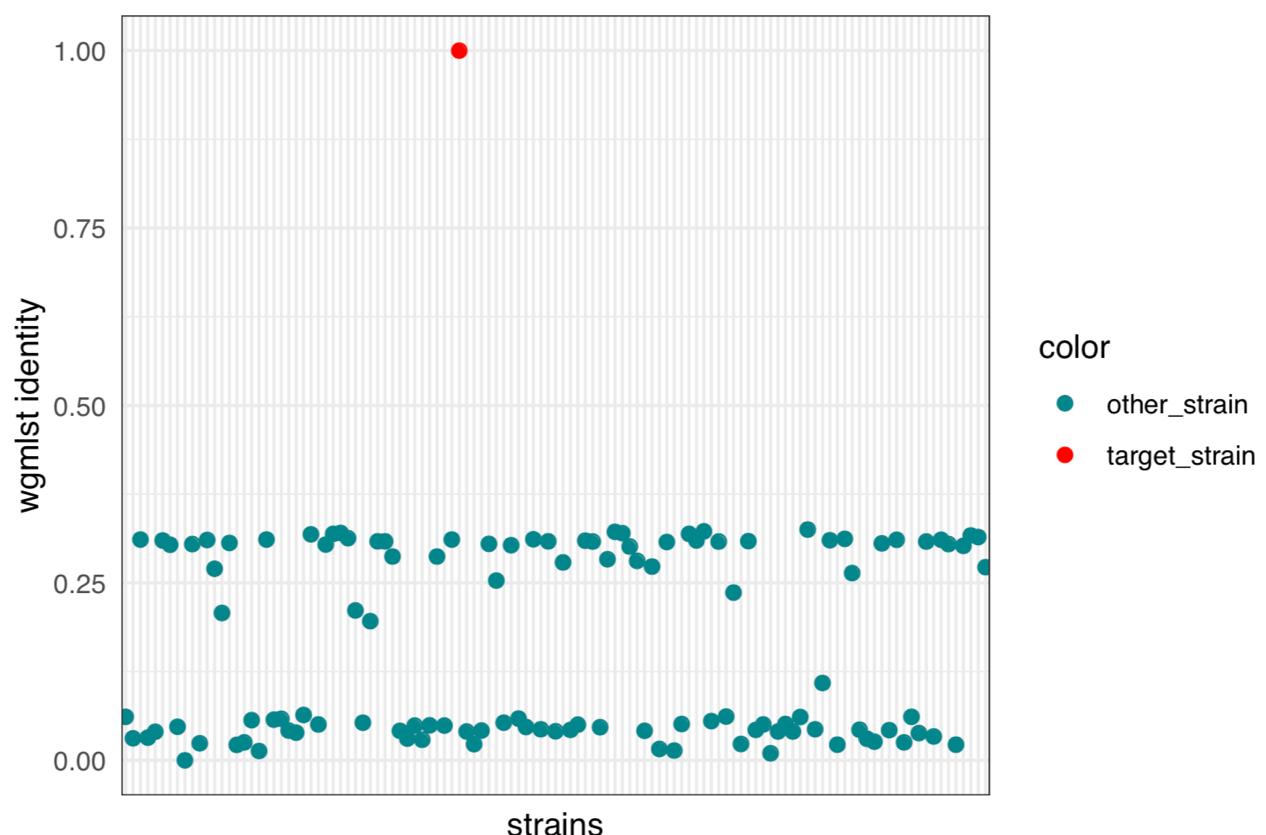
The Chinese Pharmacopoeia requires accurate intraspecies identification of engineered strains during drug development and manufacturing. Traditional methods are often complex and time-consuming. Sequanta Technologies has independently developed a high-throughput multi-locus sequence typing (MLST) technology based on whole-genome sequencing, enabling rapid and high-throughput identification and differentiation of strains within the same species. Taking Escherichia coli as an example, the platform can effectively distinguish 128 engineered E. coli strains and 1,570 E. coli strains from the NCBI database, covering a broad range of E. coli strain types.
描述
(Identification map of Escherichia coli strain) The ordinate is the site comparison rate, the abscissa is the Escherichia coli strain, and the red is the 100% comparison strain
Microbial Contamination Detection
According to Good Manufacturing Practice (GMP) requirements, traditional molecular methods for exogenous microorganism detection, including Sanger sequencing, qPCR, and ddPCR, are commonly used to identify bacterial, mycoplasma, and chlamydia contamination. However, these targeted methods have limited detection ranges and may fail to identify microbial contaminants beyond the predefined targets. Sequanta Technologies’ genomic microbial contamination detection solution utilizes whole-genome sequencing to comprehensively profile nucleic acids in samples and compares sequencing data against updated reference databases for accurate microbial contamination identification. Through optimized background control strategies, advanced sequence alignment algorithms, regularly updated dedicated databases, and manual review workflows, the solution enables more accurate microbial species identification. The detection capability covers 9,471 bacteria, 1,854 fungi, 15,752 viruses, and 104 mycoplasma/chlamydia species, encompassing a total of 27,181 microorganisms.

Drug Screening and Pharmacodynamic Studies
Cell-based drug screening and pharmacokinetic studies are essential components of drug development, often requiring the evaluation of hundreds of compounds or drug combinations. Therefore, high-throughput and cost-effective approaches are urgently needed to profile RNA expression changes in cell samples, evaluate drug efficacy, and investigate mechanisms of action. Sequanta Technologies has developed a high-throughput RNA-seq solution tailored for large-scale drug screening applications. This solution enables direct RNA expression profiling of 384 cell culture samples in a single 384-well plate. The generated data provide comprehensive transcriptome expression profiles, enabling the analysis of complex biological functions and pathway alterations, evaluation of drug mechanisms of action, identification of potential drug targets, prediction of drug-related adverse effects, assessment of combination therapy potential, and discovery of new applications for existing drugs. This solution significantly simplifies and accelerates drug screening and efficacy evaluation workflows.
Cases 2
High-throughput Drug Screening (HT-RNA-seq)
Using well barcode and UMI-based quantification technologies, samples from a 384-well plate are pooled for library construction. Combined with bioinformatic analysis, RNA expression profiles of individual samples can be obtained.
• Low sample input requirement: 2,000–10,000 cells
• Fast, high-throughput, and cost-effective
• High accuracy with reduced PCR amplification bias
• High concordance of expression profiles compared with conventional mRNA sequencing methods (Figure)
描述
1S:HT-RNA-seq 2S: Traditional mRNA-seq
A549 cells were treated with an LSD1 inhibitor and DMSO (control), followed by transcriptome sequencing using HT-RNA-seq (1S) and conventional mRNA-seq (2S), with four biological replicates for each group. Transcriptome data concordance between the two methods was evaluated. The correlation between HT-RNA-seq and conventional mRNA-seq reached 0.94.
Drug Target Discovery and Validation
The Sequanta multi-omics platform supports target and pharmacodynamic validation studies at the cellular, organoid, and animal model levels. It integrates genomic, transcriptomic, epigenomic, and proteomic data and applies proprietary integrated analysis algorithms and machine learning approaches, combined with information from relevant public databases, to enable multidimensional and comprehensive analyses of disease mechanisms and drug mechanisms of action. The platform facilitates evaluation of drug MoA, identification of potential drug targets, prediction of drug-related adverse effects, assessment of drug combination potential, and more accurate drug target discovery and validation, while enabling the identification of new therapeutic applications for existing drugs.
Cases 3
Assessment of Consistency with Tumor Tissue
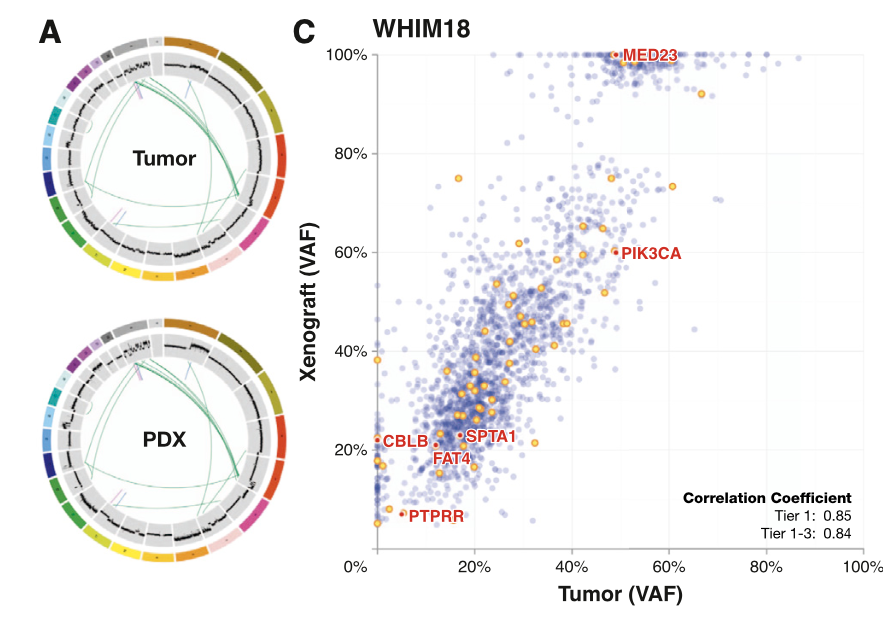
Based on high-throughput whole-genome sequencing (WGS), SNVs, CNVs, and SVs were analyzed to assess the genomic concordance between the model and tumor tissue.
描述
Adapted from Cell Reports 4, 1116–1130. The left panel shows genomic alterations in tumor and PDX samples, while the right panel shows the concordance of genomic alterations between tumor and PDX samples.
Comprehensive Transcriptome Expression Profiles
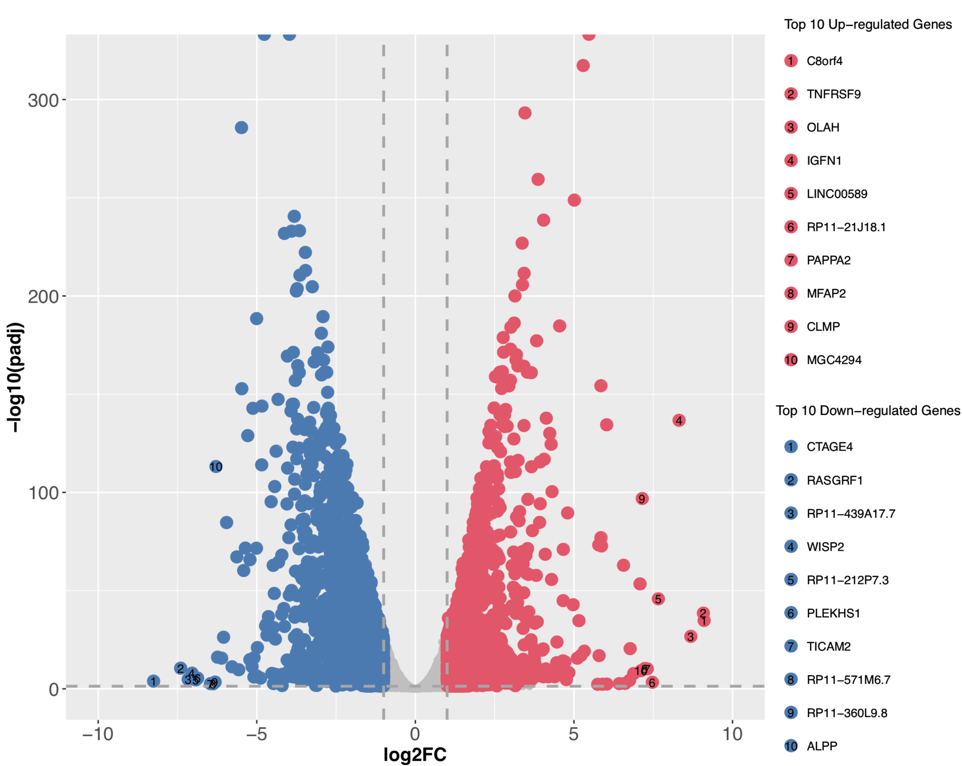
Based on high-throughput transcriptome sequencing, differentially expressed genes are identified, followed by functional and pathway analyses to discover potential drug targets and pathways associated with drug mechanisms of action.
描述
Volcano plot showing differentially expressed genes identified by transcriptome sequencing after drug treatment.
Single-cell Analysis
Based on single-cell transcriptomic sequencing, this approach enables in-depth analysis of tumor heterogeneity and exploration of the relationship between immune microenvironment alterations and drug response.
描述
Single-cell clustering analysis identified 18 distinct cell populations in the sample.